


 Road side assistance plans offer great benefits to drivers. Whether you drive locally, travel across the country or anywhere in-between, a road side assistance plan is recommended by Toyota of Dothan. Here is a closer look at what is typically offered in a road side assistance plan.
What Is Covered In A Basic Road Side Assistance Plan
Your basic road side assistance plan typically offers 24/7 coverage for your basic road side assistance needs. This usually includes changing of a flat tire, delivery of gas, jump start to your car’s battery and lock out assistance. Additionally, local towing is usually included in a basic plan.
Additional Coverage Found In Some Road Side Assistance Plans
Road Side service plans can include a variety of additional coverage options. Benefits of enhanced plans usually include long distance towing. Trip interruption expenses while your vehicle is being serviced, like an overnight in a hotel and meals, are often included. Other benefits may include trip planning assistance and free road maps. Discounts on hotels, car rentals, theme parks and restaurants are also perks of some road side assistance plans.
Choosing A Road Side Assistance Plan That Is Right For You
Prices and benefits of road side assistance plans very. Before purchasing a road side assistance plan you should determine your needs and then compare plans and prices to decide which one is right for you. If you only travel near home then a basic plan may be a perfect fit. If you do a lot of traveling, a more comprehensive plan may be a better choice.
![[Facebook]](https://www.toyotaofdothan.com/blogs/409/wp-content/plugins/bookmarkify/facebook.png)
![[LinkedIn]](https://www.toyotaofdothan.com/blogs/409/wp-content/plugins/bookmarkify/linkedin.png)
![[Twitter]](https://www.toyotaofdothan.com/blogs/409/wp-content/plugins/bookmarkify/twitter.png)
![[Yahoo!]](https://www.toyotaofdothan.com/blogs/409/wp-content/plugins/bookmarkify/yahoo.png)
![[Email]](https://www.toyotaofdothan.com/blogs/409/wp-content/plugins/bookmarkify/email.png)
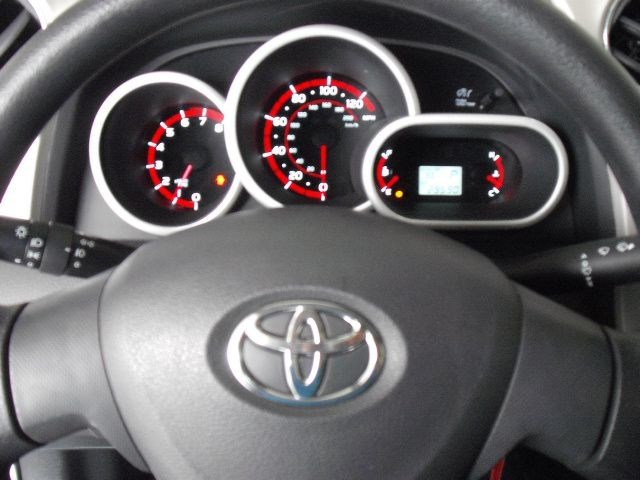
The steering gear is an important part of your day-to-day driving. The steering gear, which is also referred to as the steering gear box, is responsible for exactly what the names suggests: steering the car in the direction indicated by the position of the wheel. What happens if something is a little off? Toyota of Dothan discusses damage to the steering gear.
How Does the Steering Gear Work?
The steering gear, or steering gear box, responds to the position of the steering shaft, transmitting the direction to the wheels to that the car travels in the intended direction. The steering gear permits you to merge, turn corners, and to switch lanes quickly and with very little effort.
How Can I Tell if My Steering Gear is Damaged?
One of the most revealing indicators of wear or damage is the lack of response when steering. If you try to turn or switch lanes, and you experience a significant delay, the steering gear is most likely the culprit. We have come a long way from the steering of the old days, which was laborious and exhausting. If you sense a decline in your steering, visit the shop right away. There are other ways of identifying damage or failure: steering is jerky, there is excessive play, you notice a leak from the gearbox or steering shaft, or cracks are evident.
What are the Dangers of a Damaged or Worn Steering Gear?
Think about this for a moment: you go to turn quickly, or you need to make a sudden maneuver to avoid danger, but the car does not respond to the action. What do you think the result will be? You need to have steady steering to control the car at high speeds, to make maneuvers, and to avoid accidents. Anything short of responsive will be disastrous.
Sending your teen driver off in a car alone is very nerve-racking. You do a great job teaching your teen the rules of the road and important safety habits, but what you cannot control is other drivers and the unexpected. Wouldn’t you want to know that the car you choose for your teen would protect your teen when you cannot? The IIHS recommends pre-owned Toyotas from Toyota of Dothan for your teen.

Benefits of Buying Toyotas
One phrase is transforming safety in the auto industry: Star Safety System™. In 2010, Toyota began making the system standard in ALL models. The system is comprised of essential safety technologies: ABS, stability control, traction control, brakeforce distribution and brake assist.
Best Midsize Cars: 2012 and Newer Toyota Camry and Toyota Prius
The collection of 2014 Toyota Camry sedans on the lot is plentiful and affordable. Pricing for the sedans ranges from $19K to $22K. The CARFAX 1-owner sedans are Toyota Certified, backed by a warranty, and the recipients of the 2014 IIHS Top Safety Pick Award.
The 2012 Toyota Prius is priced below $18K, and the 2013 Toyota Prius Three features a price below $22K. The 1.8-liter engines under the hood are coupled with hybrid electric motors to maximize efficiency. According to the EPA, the fuel economy rating for the hybrids is 51/48 mpg, which has the potential to save consumers $4750 in fuel costs over five years. Both the 2012 and 2013 Toyota Prius hybrids are IIHS Top Safety Picks.
Toyota of Dothan Explains Paddle Shifters
Have you heard the term ‘paddle shifter’ recently? If you have been shopping for a car online, chances are you have. A few Toyota vehicles are equipped with the feature, but what is it and how does it work. Toyota of Dothan explains paddle shifters.

What are Paddle Shifters?
Paddle shifters are ideal for drivers who like to have a little more control over their speeds and RPMs. Manual transmission are still very popular options for drivers, and many high performance vehicles features standard transmissions. Paddle shifters capture the essence of the manual transmission, but without all of the work. Paddle shifters are generally located on the back of the steering wheel, on either the left or right side. The shifters are hand-operated and permit the driver to choose between ‘drive’ mode and ‘manual’ mode. Drive does not require shifting. Manual mode gives the driver the ability to shift either up or down. The shifters are usually a minus paddle on one side for downshifting, and a plus paddle on the opposite side for upshifting.
How do I Use Paddle Shifters?
Not all designs are the same, but many work similarly. With the car in ‘drive,’ you just drive as you would with an automatic. If you downshift or upshift when the car is in drive mode, the transmission will adjust accordingly, but only temporarily. If you want to take complete control of shifting, you have to switch the manual operation mode, which allows you to control the RPM at which the gears are changed.
Pack Everyone in a Toyota with 3rd-Row Seating
More and more manufacturers are offering SUVs and crossovers with three rows; however, some back seats are a little more compact that others. If you are shopping for a vehicle with 3rd-row seating, consider the passengers you will transport in the back. You may not always be transporting kids; adults need a comfortable place to sit, too. You can pack everyone into a Toyota with 3rd-row seating.

2001 Toyota Sequoia SR5
If you are on a budget, the ’01 Toyota Sequoia SR5 is in excellent choice. The price for the large 8-passenger SUV is less than $10,000, and it is loaded with many of your favorite features. The 4.7-liter V8 under the hood is coupled with a rear-wheel drive drivetrain to produce 240 hp and 12/16 mpg. Features in the SUV include engine immobilizer, airbags, power outlet, AM/FM radio, all-season tires, automatic headlights, and ABS.
2015 Toyota Highlander FWD
The 2015 Toyota Highlander is the number one Affordable Midsize SUV, according to US News. The SUV also earned a 5-star safety rating from NHTSA, and a 2015 Best Buy Award from KBB. Toyota designed the Highlander to address your driving needs and budget concerns. The Highlander SUV with a 2.7-liter inline-4 produces 185 hp and averages 20/25 mpg. If you upgrade to the FWD 3.5-liter V6, you will benefit from 270 hp and a 19/25-mpg fuel economy rating.
2015 Toyota Sienna 8-passenger FWD
The 2015 Toyota Sienna is a 2014 IIHS Top Safety Pick+, a title awarded to only two minivans in 2014. The family minivan features a 3.5-liter V6 with a 6-speed automatic and a front-wheel-drive drivetrain. The hp rating is 266 at 6200 RPM, and the fuel economy rating is 18/25 mpg. The available trim levels are the LE and the XLE. The XLE takes comfort one-step further with leather seating.
The gas prices have been relatively painless, but as American drivers, we know better than to get too comfortable with the low prices. We are in the midst of a crazy travel season, and there is no better way to manage your fuel expenses than with a credit card. Choose a credit card that can be used anywhere and offers money back when you are at the pump. Toyota of Dothan discusses ways you can use a credit card to save cash on gas.

What are Gas Rewards Cards?
Gas rewards cards are credit cards that offer you more flexibility and better rates. When you fill up at the gas pump, you will notice that many stations have credit card applications right on the top of the pump, but those may not be the best way to go. Many credit cards offer cash-back rewards for fuel. Gas rewards cards are regular credit cards that offer a variety of incentives: sign-up bonuses, cash-back options, gas rebates, and rotating bonuses.
What are the Benefits of a Gas Rewards Card?
One of the biggest benefits of owning a gas rewards card is versatility. The cards are not limited to specific gas station; they can be used anywhere VISA, MasterCard, AmEx or Discover are accepted, depending on the type of card you choose. Additional benefits include:
- Cash back bonuses
- Can be accepted at any gas station throughout the US
- Receive rewards on more than fuel
- Many cards do not have an annual fee
- Balance transfer options
- Lower APR than traditional gas-company-exclusive credit cards
- Many cards so not have required gas spending amounts for bonuses and rewards
- User is not responsible for unauthorized purchases
- Easier to manage fuel costs on a weekly, monthly, and annual basis
- Some cards offer more rewards points when users shop with specific retailers
2015 Toyota Sienna at Toyota of Dothan Excels Where the Competition Falls Short in Safety Tests
The IIHS recently released a press release about the minivans on the market and their safety ratings. The IIHS tests revealed that many popular models, that carry thousands of families on the roads, did not fare well in safety tests, but the Sienna was not one of them. The 2015 Toyota Sienna at Toyota of Dothan excels where the competition falls short in IIHS safety tests.

IIHS Crash Test Results
According to the IIHS, three out of the five minivans evaluated received poor results in a crucial safety test—small overlap front. The small overlap front test is designed to mimic a common impact when the front corner of a car collides with another vehicle, a utility pole or a tree. The vehicle travels at 40 mph before the collision. A majority of the impact it directly in front of the steering wheel. After completing the test, the IIHS looked at dummy injuries and the damage done to the vehicle. The IIHS reports that one minivan’s structure collapsed completely around the driver, and another minivan’s damage was so extensive that the Institute referred to it as “off the scale.” The most common injuries included damage to the hip and thigh, and the lower leg and foot.
2015 Toyota Sienna Results
According to the IIHS, the Sienna earned a 2014 Top Safety Pick + Award, an award given to only two minivans. According to the IIHS, the Sienna minivan earned good ratings in four tests, an acceptable rating in the crucial small overlap front evaluation, and an advanced rating for its front crash prevention system.
If you’re a parent, the day is going to come, whether you like it or not. That child is going to turn 16 and start asking for a car. There are some things your Toyota of Dothan wants parents to consider when buying a teenagers first car.
Decide Who is Buying the Car
Are you, the parent, buying the car? Will the teen buy the car? Is it a shared effort? Most financial experts agree that the teenager should have at least some investment into the vehicle. Ownership, at a price, breeds responsibility. Make that decision before you start the conversation with your son or daughter, however. Your portion, if any, is YOUR decision.
Safe, Not Sporty
Your new driver is probably going to want something sporty– and fast. You probably prefer to put them in your parent’s car. The best option is probably somewhere in the middle. A mid-size sedan will typically get decent gas mileage and will be solid and safe.
Engine Size
Think four cylinders here. There is enough power to do everything that needs to be done- get from point A to point B safely- and not enough power to be a temptation. No matter how responsible your child is, a big powerful engine is a big no-no!
Consequences Right From the Start
Set the rules. Let them know what type of behavior is NOT allowed. For example, don’t put on makeup while you’re driving. Don’t eat while you’re behind the wheel. Keep the music at a decent volumes- and save the earbuds for later. Above all, no drinking and driving. Let them know you will always come and pick them up if they are impaired. Most importantly, determine the consequences for breaking the rules before the rules are broken– and stick to it!
This is just the beginning of the considerations before your teen buys their first car. It’s a big step- help them make it a wise one.
Does Toyota of Dothan Recommend Synthetic Oil?
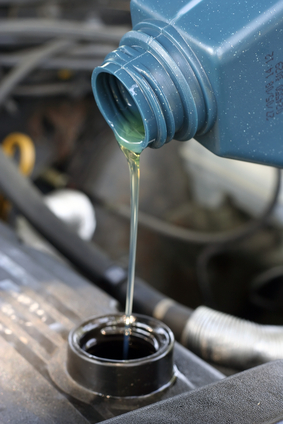 Frequent oil changes are the bane of many drivers. The cost, the time, the remembering, all add up to a general dislike of how often cars need the oil changed. Toyota of Dothan has a word for drivers who wonder if synthetic oil is worth the extra cost over petroleum based oil.
The oil in your engine provides several functions. It protects the engine from heat, it reduces friction and it keeps the engine clean and corrosion-free. It is probably the most necessary fluid in the engine. The problem is standard petroleum based oil breaks down easily and needs to be replaced every few thousand miles.
Synthetic Oil Has Advantages
Synthetic oil offers several advantages over regular oil. It tolerates heat much better and doesn’t break down like petroleum oil. It lasts much longer, extending the time between oil changes to twice as long- or more- than petroleum oil. The smaller number of oil changes helps discount the higher cost of synthetic oil.
Synthetic oil also tolerates cold weather better than petroleum, which can make a real difference to Alabama Toyota drivers traveling north. Regular oil will thicken in cold temperatures. Synthetic oil doesn’t have that problem. This feature alone can make synthetic oil the best choice for your vehicle in winter months.
Because of the powerful friction reduction provided by synthetic oil, your engine parts can last longer than they will with petroleum oils. Your oil won’t build up with sludge and dirt that can potentially harm your engine. You can expect longer engine life, with fewer problems when you choose synthetic oil.
Does Your Toyota Need a Tune-up?
 It used to be common maintenance to get a regular tune-up for your vehicle. It’s harder to know if your new vehicle needs to be brought in for a common tune-up though, isn’t it? If you have a Toyota, these are the things to get checked out on a regular basis.
With electronic ignitions, your wheels don’t have the same issues they used to. But there are a few things to keep an eye on. Sure, you don’t have to putz with the carburetor like you used to, but that doesn’t mean your vehicle is maintenance free.
Computer Diagnostics Tell the Tale
Late model Toyotas have a computer that runs a constant diagnostic test on your vehicle. When something goes awry, a light shows up on the dash and you know it’s time to take it in. The frustration, however, is many cars have a general Engine Needs Service light and the problem can be anything from transmission trouble to a sensor fail.
Spark Plugs Still Need Spark
With all the advances in car engines, spark plugs still need to work properly and they do need to be replaced. Your battery is probably sealed, but it needs to be checked for power loss. Other mechanical pieces will fail and need replacement as well.
You may be able to go as long as 100,000 miles without a tune up. Check your owner’s manual to see what is recommended for your model. Even though you need to go less often, it doesn’t mean you never go at all.
Connect with us
