


Hydroplaning Basics from Toyota of Dothan
 If you’ve ever skidded while driving down a wet road but didn’t lose total control, you’ve probably experienced hydroplaning. Your Toyota of Dothan dealership wants you to understand the basics of this and how you can avoid it to keep safe on the road.
Hydroplaning Explained
Hydroplaning is known as the sliding or skidding of car tires over a wet surface. It happens when a tire encounters more water than it is capable of scattering. The water pressure in the front wheel pushes water underneath the tire, and then the tire is separated from the surface of the road by a thin film of water, losing traction. This results in a loss of braking, steering and power control.
Conditions for Hydroplaning
Hydroplaning can happen on any wet road, but the first ten minutes of a light rain are potentially the most dangerous.
When this light rain combines with oil residues from the road, this makes slippery conditions which can make vehicles, especially ones moving over 35 mph, to hydroplane. This is possibly a deadly combination for you and those around you.
How to Avoid Hydroplaning
The tips below will help you to avoid hydroplaning.
- Replace and rotate tires when needed
- Keep your tires inflated properly
- Keep away from standing water and puddles
- Slow down when the road conditions are wet. The faster you drive the harder it will be for your tires to scatter the water.
- Try driving in tire tracks left by other cars ahead of you
- Don’t drive in the outer lanes where the water usually accumulates
- Drive in a lower gear
- Do not use cruise control
- Try to not make any quick or sharp turns
- Avoid hard braking
![[Facebook]](https://www.toyotaofdothan.com/blogs/409/wp-content/plugins/bookmarkify/facebook.png)
![[LinkedIn]](https://www.toyotaofdothan.com/blogs/409/wp-content/plugins/bookmarkify/linkedin.png)
![[Twitter]](https://www.toyotaofdothan.com/blogs/409/wp-content/plugins/bookmarkify/twitter.png)
![[Yahoo!]](https://www.toyotaofdothan.com/blogs/409/wp-content/plugins/bookmarkify/yahoo.png)
![[Email]](https://www.toyotaofdothan.com/blogs/409/wp-content/plugins/bookmarkify/email.png)
 For quite some time now, aggressive driving has been a problem on the roadways, but it seems to be getting worse. Incidents of rude gestures, screaming and even violence sometimes are frequently reported to where it has even earned its own name – road rage. Toyota of Dothan wants you to understand exactly what road rage is and how you can handle it.
Road Rage Definition
Road Rage is a term which was originally made up by local news station KTLA in Los Angeles after several shootings happened on freeways in the city. Road Rage is defined by the National Highway Traffic Safety Administration as when a driver commits a moving traffic offense to endanger property or someone else, or an assault with a motor vehicle or other weapon which is dangers by the operator or passenger of a motor vehicle on the operator or passengers of another vehicle.
A clear distinction is made by the NHTSA between aggressive driving and road rage, where road rage is criminal and the former is a traffic offense. This places blame on the driver.
Handling Road Rage
If you’ve agitated another driver, whether it really was your fault or not, don’t retaliate or react to the other driver, as this will just cause the situation to escalate. Remember that the other driver is just not good with handling stress, avoid eye contact with them and keep practice safe driving habits.
It doesn’t look like this problem is going away in the near future unfortunately. All you can really do is be an aware and considerate driver who follows the road rules. Even though it can be difficult when a situation arises, don’t give in to angry feelings or rage while on the road. Thing again before you honk the horn or flip someone off, since you never know what will set that person off. It is more important to get home safely than to teach someone a dangerous lesson.
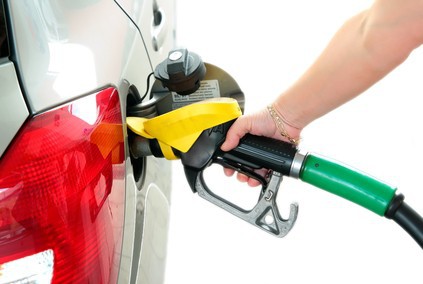 The days when you could fill your gas tank for $30 seem to be far past, and you can’t hold your breath for cheaper gas. Most likely, you’ll be running on fume before you realize there is not enough to turn back. This is why the best think you can do for the future is to be smart when it comes to fuel economy, and your Toyota of Dothan wants to show you how.
Before Traveling
- Use the motor oil recommended by your manufacturer to increase your gas mileage up to 2%.
- Use the coolest time of the day to purchase gas. It is at its densest during these times, so you will get more out of the volume.
- Ensure the tires are pressurized to the maximum limit given by the manufacturer.
- Replace a dirty air filter to increase gas mileage as much as 10%.
- Fuel efficiency is dramatically reduced when traveling on deep tire tread. Remove things like snow tires when they are not needed.
- Take out any extra weight from the car which can also reduce gas mileage.
Out on the Road
- When approaching a hill, accelerate before you reach it to keep from using extra gas.
- The faster your travel, the more gas you will consume.
- Use cruise control for highway driving.
- Having open windows or an open sunroof can increase resistance, using more fuel.
- Traveling at the speed limit will raise your likelihood for making green lights, and with less slowing or stopping you will be saving fuel.
The number one tip for saving gas is watching your acceleration. By slowing down your acceleration time to fifteen seconds when going from 0-60 mph, you can save a whopping 30% on your gas mileage.
Get into Toyota of Dothan for less than $20K
Buying a brand new car doesn’t have to be a wallet buster. You can walk away, guilt-free and still under budget. The dealership has many financing options, rebates for qualified drivers, and a collection of Toyota vehicles that don’t leave your wallet gasping for air. Get into a Toyota of Dothan for less than $20K.
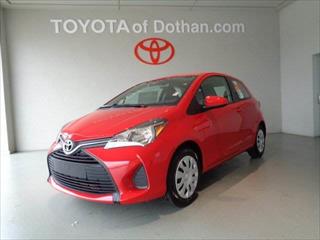
2015 Toyota Corolla L
Just because you are sticking to a budget, it doesn’t mean you are buying an unreliable or “cheap” car. In fact, the Toyota Corolla is one of the most desired compact sedans in the market; it is one of the safest; and it has the lowest ownership costs in its class. KBB awarded the 2015 Toyota Corolla L with a 2015 5-Year Cost to Own Award, and the NHTSA awarded the Corolla with an Overall 5-Star Safety Rating.
The Toyota Corolla has a 1.8-liter inline-4 with an automatic transmission and front-wheel-drive drivetrain. The horsepower rating is 132 hp. The 4-speed automatic averages an estimated 27/36 mpg, which has the potential to save you $1500 in fuel costs over 5 years compared to the average new vehicle. Installed features in the Corolla include the iconic Star Safety System™, Bluetooth®, AM/FM radio with a CD player and MP3 playback, engine immobilizer, steering wheel audio controls, 12-V power outlet, and iPod® connectivity.
2015 Toyota Yaris
The starting MSRP for the 2015 Toyota Yaris is below $15,000. The sporty Yaris has a 1.5-liter inline-4 with either a 4-speed automatic or a 5-speed manual transmission. The horsepower rating is 106 hp. The estimated fuel economy rating for the automatic option is 30/36 mpg, and the manual version averages 30/36 mpg. Both transmission options have the potential to save you nearly $1750 in fuel costs over five years compared to the average new car.
Standard features in the Toyota Yaris include the Star Safety System™, 15-inch steel wheels with all-season tires, body-colored exterior features, an air filtration system, fade-to-off interior lighting, and an Entune™ Audio system. The system includes AM/FM radio, CD player, HR radio with iTunes, USB port, and auxiliary audio jack.
Are you abreast of the recalls on your car? Researching recalls for your vehicles and pre-owned vehicles you plan to buy is easy and free. Millions of recalls are issued every year, and some people have the issues addressed, while others do not. Are you up-to-date on yours? If you want to know if your vehicle has been recalled, visit safercar.gov to find out. Toyota of Dothan encourages drivers to research recall information.

NHTSA has a Free, Online Tool
Visit www.safercar.gov/vinlookup to accesses the free lookup tool. The tool is designed to provide consumers with important information about recalls, past and present. The tool relies on information that is submitted weekly by automakers. Automakers are required to provide consumers with free access to uncompleted recall information. The NHTSA uses the information on the sites to provide all consumers with the most accurate and up-to-date information about recalls. Once a car buyer, renter, or owner puts a vehicle’s VIN in the online tool it provides information about the following:
- Incomplete recalls
- Recalls issued over the last 15 years
- Recalls conducted by light automobile and motorcycle manufacturers
It is important to note the tool DOES NOT provide completed recall information, customer service for manufacturers, international brands that are not sold in America, and recalls for some super-luxury brands.
How do I use the Tool?
Using the tool is simple:
- Visit the vin tool here.
- Input the vehicle VIN, which can be found in the driver door, on the dash plate in the front window, on your registration, and on your car insurance cards.
- Type in the verifier code.
- After you hit submit, the results will show your VIN, year, make, model, and the number of open recalls.
Toyota of Dothan Discusses Buying a Pre-Owned 4×4
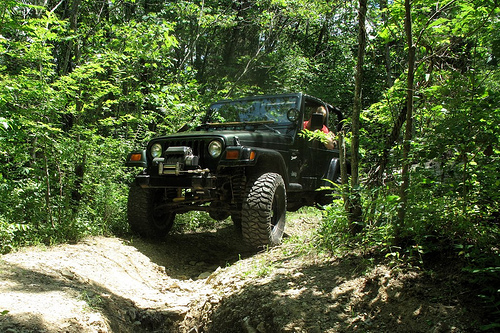
If you are shopping for a 4×4 vehicle, you have big plans for adventure. Whether are you are looking for an SUV or a pickup, you need to take a few extra steps to ensure you are making a safe decision. A 4×4 that is in the best shape, or one that has been driven hard, will end up costing you more than what you pay at the lot. Toyota of Dothan discusses buying a pre-owned 4×4.
- Watch the mileage
Compare the mileage on the 4x4s you are looking at. If the vehicle is only a couple years old and has an excessive amount of miles, which average more than 10,000 miles per year, be leery of saying ‘yes’ without doing a little more research.
- Take a test drive
The test drive is essential when you are buying a vehicle, but it is especially important when purchasing a 4×4. When you go for a test drive, drive on and off the road. Feel the suspension, vehicle response, steering, braking, and, most importantly, the 4-wheel drive. Listen and feel the 4-wheel drive when you engage it.
- Visually inspect the vehicle
Get all around the 4×4, looking at every corner of the ride. Get underneath the vehicle and inspect the suspension, wheels and steering system. Pay close attention to dents, leaks, and additional evidence of excessive wear and tear.
- Visit a mechanic
Have the pre-owned 4×4 inspected at a repair shop. The mechanic should look at everything under the hood, the brakes, transmission, and other operating systems.
- Ask to see the vehicle history report
Finally, ask to see the vehicle history report. Look for major claims and service records to help you better understand the health of the vehicle. The report will provide you with insight into previous care habits with the previous owner.
Many myths about driving in tornadoes are all over the internet, and some of the bad advice can actually be deadly. Whether a tornado strikes when you are driving in town or you are on a road trip, remaining calm and taking action will save your life. Toyota of Dothan offers advice for driving in a tornado.

- Keep your radio on
If the weather is bad, make sure your car radio is on a local radio station. Your AM/FM channels will give you accurate weather information and warnings as soon as warnings and watches are in effect. If a tornado alert comes across the speakers, take immediate action to stay safe. Do not try to push it or buy yourself more time; it is not safe.
- Do not follow the cars to the highway overpass
Movies and misinformation online have told drivers to seek shelter under highway overpasses. This is a deadly decision, but people still flock to them when a tornado hits. In reality, the wind speeds from a tornado actually increase beneath the overpasses. Not only does the area become a wind tunnel, the structure can crumple on top of you, leaving you pinned beneath.
- Get out
When you hear a tornado warning, get out of your vehicle and seek shelter right away. Go inside a 4-walled structure, not under a carport or awning. Wherever you are, get down low and cover your face and head with your arms, a shirt, or other protective device.
- Get low
If you are outside, and a sturdy shelter is not nearby, get low. Do not try to outrun the tornado; they can change direction at ANY moment. Lie on the ground or in an embankment. Wherever you go, make sure it is the low-lying area, and cover your face and head.
- Buckle up
If you are in your vehicle and shelter is not nearby, try to drive away from the tornado if you can. If you cannot because you are stuck in traffic or on a divided highway, remain in your vehicle and buckle up. Put your head down lower than the windows and cover you head with a jacket, shirt, bag, or your arms.
Hybrids are hot right now, and they will remain that way for a while. It seems as if everyone if offering hybrid versions of their own, but which ones are the best investments for your cash? Toyota is the company that started the modern hybrid craze, and now the lineup is greater than ever. Toyota combined hybrid technology with some of the company’s most popular brands, and it is good for your bottom line. The 2015 Toyota Camry at Toyota of Dothan wins the KBB 2015 Best Resale Value Award in the Hybrid/Alternative Energy Car.
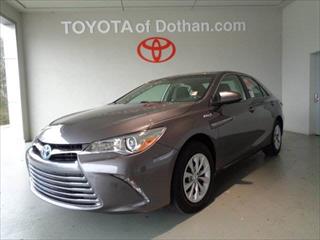
Snapshot of the Hybrid
US News and World Report ranked the 2015 Toyota Camry Hybrid #2 in both the Affordable Midsize Cars and Hybrid Cars segments. The 2015 Toyota Camry is the recipient of the 2015 IIHS Top Safety Pick+ Award. Powering the award-winning hybrid is a combination of a 2.5-liter 4-cylinder engine and an electric motor. The net horsepower rating is 200 hp, and the estimated fuel economy rating is 43/39 mpg (LE) or 40/38 mpg for the SE and XLE trim levels.
Resale Value for the Camry Hybrid
The MSRP for the Camry Hybrid LE begins at $26,790; Hybrid SE is $27,995; and the Hybrid XLE is $29,980. The price is low and the resale is high. According to the KBB experts, the 3-year resale value is 58.7% and the 5-year is 46.7%. If you are buying a hybrid, you are probably concerned about your fuel savings as much as your carbon footprint. The EPA reports the Toyota Camry Hybrid LE has a potential 5-year fuel savings of $2,750, and the XLE/SE saves $2,500.
The Toyota Sienna is having a great year. In addition to safety and reliability awards, the popular minivan also earned recognition from Kelley Blue Book for its resale value. A strong resale value ensures you are making a good investment on a vehicle, one that won’t cost you later on down the road. The 2015 Toyota Sienna at Toyota of Dothan earned 2015 Best Resale Value Award in the Minivan/Van class.
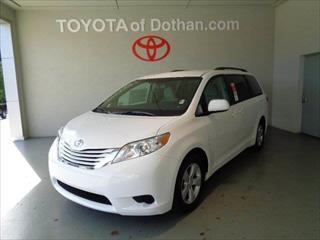
Overview of the 2015 Toyota Sienna
Toyota made changes to the Toyota Sienna to improve the visual appeal, interior comfort, and driving experience. A couple of the best features of the minivan is its 8-passenger capacity and AWD capability. Under the hood is a 3.5-liter V6 that produces 266 hp at 6200 RPM and 245 lb.-ft. of torque at 4700 RPM. The estimated fuel economy rating for the FWD is 18/25 mpg, and the AWD averages an estimated 16/23 mpg.
Toyota equipped the Sienna with eight airbags, including a driver knee bag, Bluetooth®, the Star Safety System™, six cup holders, a touchscreen display, USB port, and a standard backup camera. Toyota provides drivers with ToyotaCare™, which includes 24/7 roadside assistance and two years or 25,000 miles of free maintenance.
Toyota Resale Values
The MSRP for the Toyota Sienna starts at $28,600. The available trim levels include the L, LE, SE, XLE, and the Limited. According to the KBB editors, the projected resale value for the 2015 Toyota Sienna at three years of ownership is 57.9% and 44.3% after five years of ownership.
Checklist Before you Buy at Toyota of Dothan
Are you planning on heading to a car dealership soon? Whether you are trading in your existing ride, adding a new car to the family, or shopping the pre-owned lot, you need to be ready for the task. Consider doing a few things before you take a look at the inventory. Toyota of Dothan has a checklist of the things to do before you buy.
 1. Determine what you can afford
A budget is a must. You can’t begin your journey without knowing what it is you can afford. If you have extra money one month, don’t count on it for the life of your car loan. Don’t over-extend yourself and always be mindful of fuel prices, insurance premiums, maintenance costs, and sudden service expenses.
2. Look for sales and rebates
Check out the dealership site for available sales and rebates for which you may be eligible. Look at the terms of eligibility and special considerations.
3. Read dealership reviews
Ask friends for referrals and hit the net to read consumer feedback. Customer reviews and word-of-mouth provide some of the most information you will need to know about a dealer and the people who represent it.
4. Know your credit
Know your credit picture and score before you begin your hunt. This will help you know what to expect when you are working with the finance office.
5. Create a running list of options
Create a list of the things you need in a vehicle. Compile a list of options that coincide with your budget and driving needs.
6. Research safety ratings, insurance costs, and cost-to-own data
Now it is time to dig in a little deeper. Get to know each vehicle. Research everything from invoice price and safety ratings to cost-to-own data and reliability ratings. Once you have whittled down the list, go to the dealership and test drive each vehicle you are considering.
7. Close the deal
Now that you know have found the best vehicle for you and your needs, it is time to talk money with the dealer. Make sure the final price is exactly on which you and the sales representative has agreed.
Connect with us
